Penguin Research
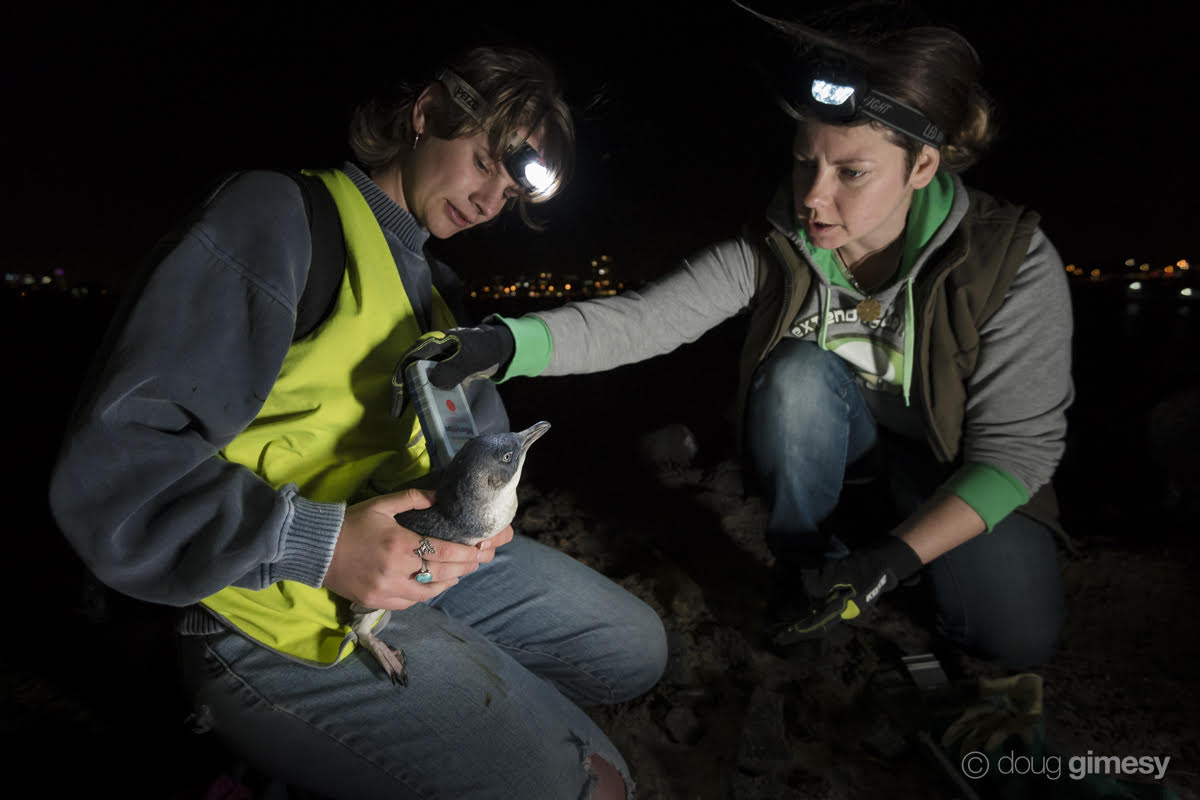
Since 1986, volunteers have ventured onto the rocks of the St Kilda breakwater to collect data on Little Penguins. This includes microchipping and weighing penguins, and recording breeding and moulting observations. Thanks to funding from the Victorian Government’s Port Phillip Bay Fund, we now run a renewed monitoring program that is less intrusive, more accurate, and has a strong community focus.
35 years of penguin research PDF
Meet the penguins
The secret life of Urban birds Melbourne Episode
Raft Count Program
Three evenings a week, two teams of citizen scientists position themselves along the breakwater and marina to count penguins in “rafts” as they return to land after sunset.
These counts help us:
Track population trends over time
Understand seasonal changes in penguin numbers
Maintain a low-impact monitoring method that keeps penguins safe
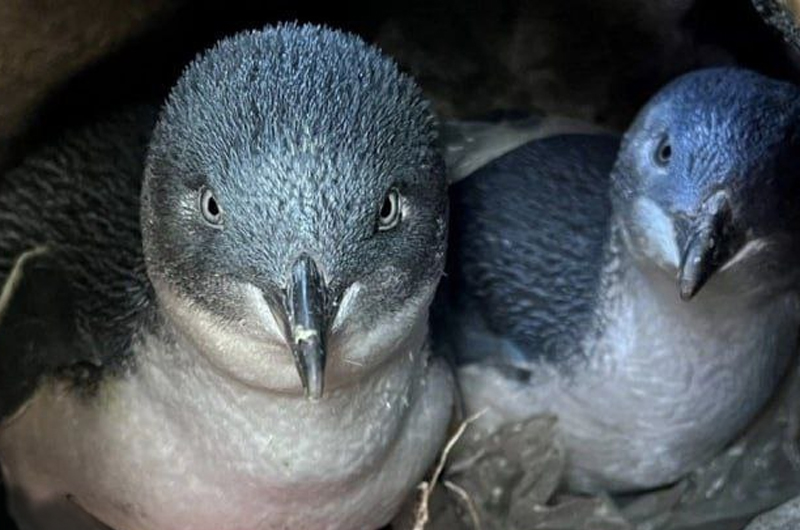
Breeding Monitoring Program
We monitor penguin nests on the breakwater throughout the year, recording:
Egg laying and hatching dates
Chick growth and fledging success
Adult health, including microchipping and weighing
Presence of entanglements or litter, which are removed whenever it is safe to do so
This long-term data helps us understand the colony’s breeding success and respond to emerging threats.
Acoustic Monitoring Program
In partnership with the Biological Observation Monash student team, we are developing passive acoustic recorders and software that can identify individual penguin calls and estimate population trends. Once fully developed, this technology will complement raft counts and nest checks, providing a powerful, low-disturbance tool for ongoing monitoring.
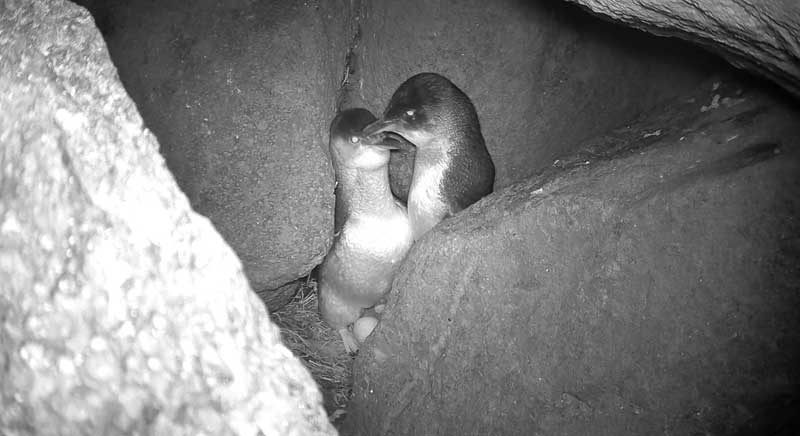
Penguin Guiding
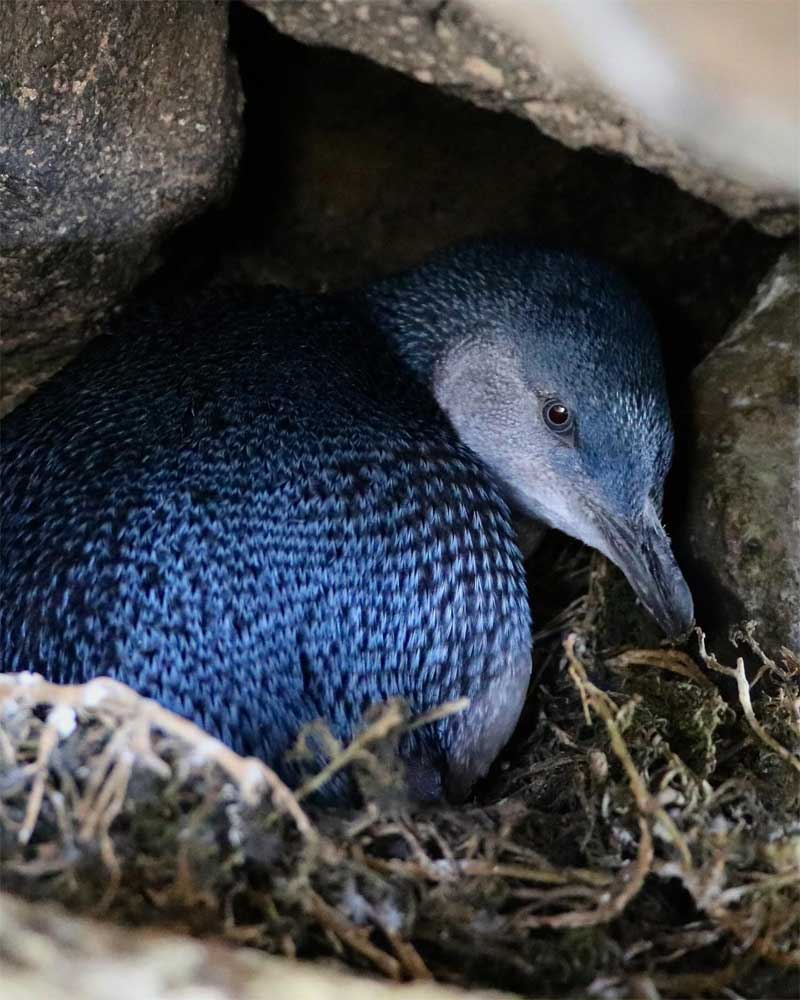
History of Penguin Guiding
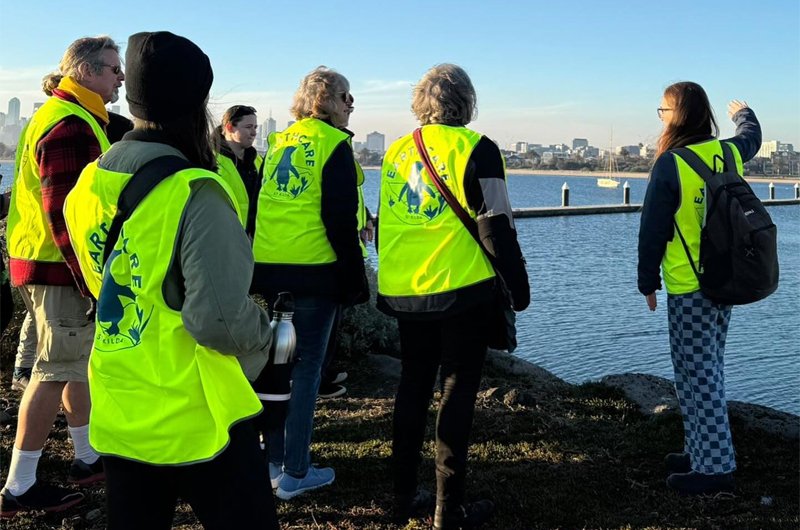
Penguin guiding started in 2008 when the research team grew concerned about members of the public sticking selfie sticks into penguin nests. As penguin viewing grew in popularity over the years, Earthcare volunteers began “guiding” visitors on weekends to prevent disturbance and educate the public. Over time, the program expanded to nightly guiding, with up to 180 volunteer guides helping thousands of people view penguins respectfully each year. The penguins received some much needed respite when the COVID-19 pandemic hit. If you enjoy talking with people, love penguins, and can commit to regular evening shifts, penguin guiding may be for you. Penguin Guide opportunities are promoted via our social media pages, keep an eye out for our next recruitment period.
Penguin Guiding Today
Now our team of 50+ volunteer Penguin Guides work alongside Phillip Island Nature Parks staff on the St Kilda Penguin Viewing Experience. Penguin Guides educate visitors about little penguin behaviour, raise awareness of conservation issues, and ensure everyone follows wildlife-friendly guidelines.
Northern Pacific Seastar Removal
Since 2008, Earthcare St Kilda members have helped protect Port Phillip Bay by removing the invasive Northern Pacific Seastar (NPS) from seagrass beds around St Kilda, now extending from Port Melbourne to Mornington.
How the Program Works
At monthly events during winter (advertised via our Events Calendar), Earthcare volunteers remove Northern Pacific Seastars (NPS) from the east coast of Port Phillip Bay, covering sites from Port Melbourne to Mornington. These hands-on conservation days target one of the bay’s most damaging invasive species and play an important role in protecting local marine life.
Each event involves two dedicated volunteer teams:
- Water Team – snorkellers and waders remove NPS by hand in the shallows. Snorkellers bring their own gear and wear wetsuits.
- Land Team – volunteers on the beach count, record and sort seastars, supporting vital data collection.
Because NPS aggregations shift with tides, weather and water quality, locations vary each event. When NPS numbers are low in Port Phillip Bay, our marine volunteers pivot to other tasks such as Undaria pinnatifida (Japanese kelp) clean-ups and general marine litter removal.
If you would like to receive regular updates on our NPS events, become a member and join our Facebook community.
Why Remove Northern Pacific Seastars?
Native to north-east Asia, the NPS was introduced to Port Phillip Bay via ballast water and now has very few natural predators. A single female can produce up to 20 million eggs per year, preying on native shellfish and other marine animals and threatening local biodiversity.
Earthcare operates NPS removal under permit from the Victorian Fisheries Authority (permit NP1165). While we cannot eradicate the species, every removal event helps reduce its impact and gives native fauna a better chance to thrive.
In mid-2025 we reached a major goal of removing over 100,000 individual NPS from Port Phillip Bay.
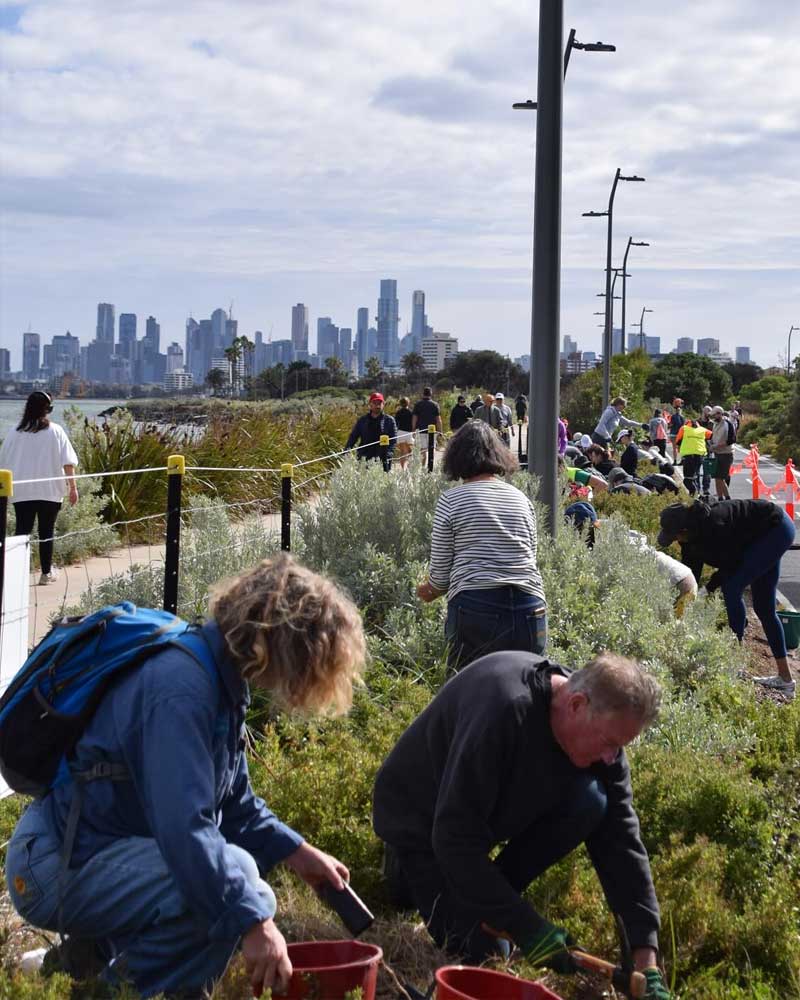
Tree Planting & Foreshore Revegetation
Since 1987, Earthcare St Kilda has supported the restoration of Indigenous flora across the City of Port Phillip. These revegetation efforts help protect the region’s unique biodiversity and fragile ecosystems.
Each winter, volunteers spend monthly Sunday mornings:
Removing invasive weeds
Planting locally native trees, shrubs and groundcovers
Improving habitat for birds, insects and other wildlife
Events are planned with rangers from the City of Port Phillip and Citywide, who provide site expertise and equipment. All seedlings are locally sourced from Westgate Biodiversity: Bili Nursery & Landcare, supporting genetically appropriate, climate-resilient plantings.
Get Involved
Breakwater Cleanups
Education & Community Engagement
We offer tailored programs for:
Primary and secondary schools
Tertiary groups
Corporate teams and community organisations
Programs may include:
Talks on Little Penguins and Port Phillip Bay ecology
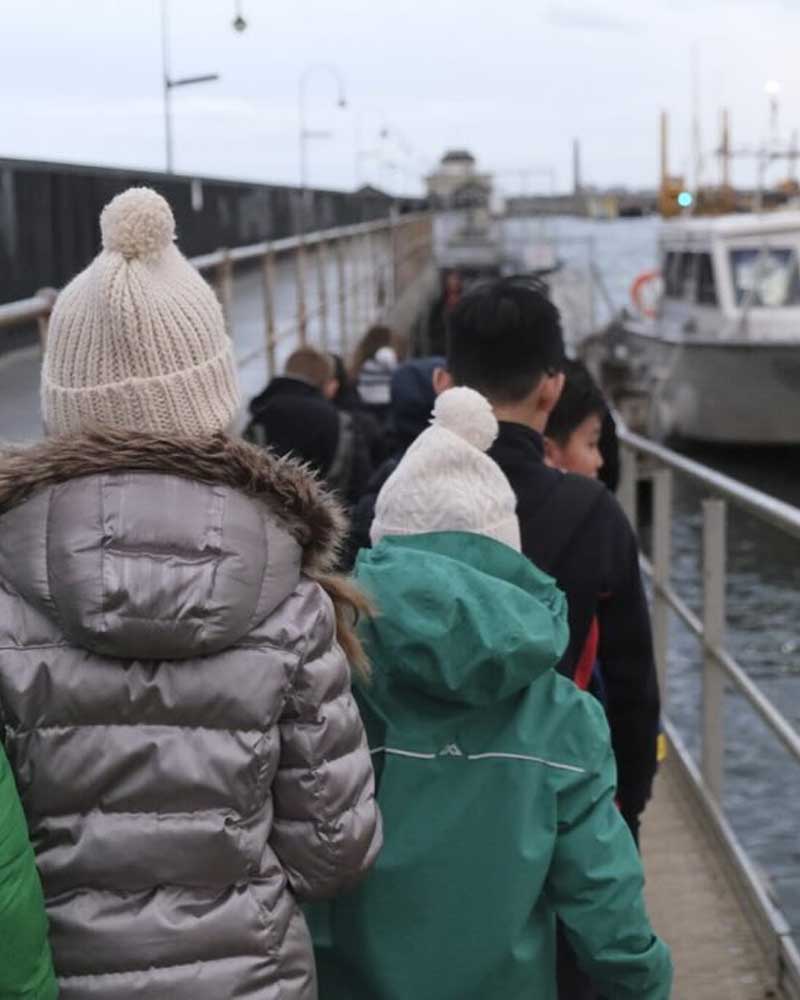
Guided walks and pier visits
Activities linked to curriculum outcomes and marine science projects
Corporate volunteering days focused on tree planting or clean-ups
Pricing varies depending on group size, duration and activities.